Buy placeholder.eu ?
We are moving the project
placeholder.eu .
Are you interested in purchasing the domain
placeholder.eu ?
domain@kv-gmbh.de · 0541-91531010
Buy placeholder.eu ?
What is a possessive pronoun in English?
A possessive pronoun in English is a pronoun that shows ownership or possession. Examples of possessive pronouns include "mine," "yours," "his," "hers," "ours," and "theirs." These pronouns are used to indicate that something belongs to a specific person or group. Possessive pronouns can stand alone or be used before a noun to show ownership. **
What is the possessive pronoun in Spanish?
The possessive pronoun in Spanish is a word that indicates ownership or possession. It agrees in gender and number with the noun it is referring to. Examples of possessive pronouns in Spanish include "mi" (my), "tu" (your), "su" (his/her/its/your formal), "nuestro/a" (our), and "vuestro/a" (your plural). **

Similar search terms for Possessive pronoun
Top-Angebote
Products related to Possessive pronoun:
-
Xbrand Hedge Wall - Outdoor Artificial Privacy Plant - Great Gardenia and Ivy Substitute - DIY Hedge DividerTransform any space with this artificial boxwood hedge wall, crafted with high-quality, lifelike foliage to enhance privacy and décor.195,99 $*Shipping: 0,00 $Secure redirect to the provider
-
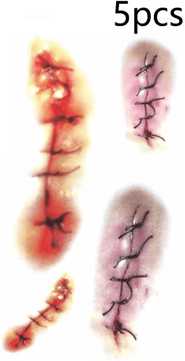
Inspire Curations Halloween Scar Temporary Tattoo Stickers Scar Temporary Tattoos Waterproof Blood FX For Cosplay & Halloween a 5pcsTake your costume to the next level with these realistic scar temporary tattoos designed to create convincing blood clot and wound effects. Available in 5 or 10piece sets, these waterproof tattoo stickers are perfect for Halloween parties, cosplay,...45,50 $*Shipping: 0,00 $Secure redirect to the provider
-
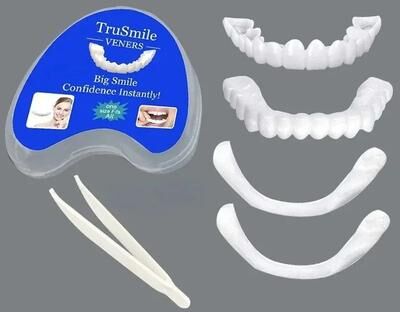
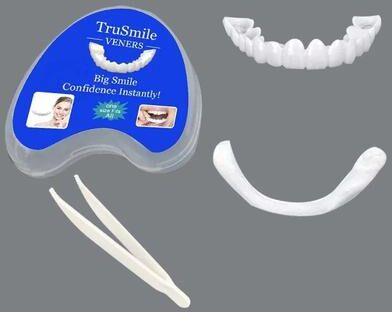
Uplifted Finds Veneer Snap on Teeth Kit Fake Temporary Tooth Whitening Replacement White Snap Repair Fitting Kit 2Regain your confident smile instantly with this Veneer Snapon Teeth Kit. This temporary tooth whitening replacement is designed for quick and easy snaprepair, providing a naturallooking white finish to cover missing or discolored teeth. Perfect for...39,97 $*Shipping: 0,00 $Secure redirect to the provider
-
Uplifted Finds Veneer Snap on Teeth Kit Fake Temporary Tooth Whitening Replacement White Snap Repair Fitting Kit 1Regain your confident smile instantly with this Veneer Snapon Teeth Kit. This temporary tooth whitening replacement is designed for quick and easy snaprepair, providing a naturallooking white finish to cover missing or discolored teeth. Perfect for...44,97 $*Shipping: 0,00 $Secure redirect to the provider



-
What is the difference between a possessive pronoun and a possessive adjective?
A possessive pronoun replaces a noun and shows ownership or possession, such as "mine," "yours," "his," "hers," "ours," and "theirs." On the other hand, a possessive adjective modifies a noun to show ownership or possession, such as "my," "your," "his," "her," "our," and "their." In essence, possessive pronouns stand alone, while possessive adjectives are used before a noun to describe who owns or possesses it. **
-
What is the difference between a personal pronoun and a possessive pronoun?
A personal pronoun is used to replace a noun and refers to a specific person or thing, such as "he," "she," or "they." On the other hand, a possessive pronoun shows ownership or possession, such as "his," "her," or "their." Personal pronouns indicate who is performing the action in a sentence, while possessive pronouns indicate who owns or possesses something. **
-
What is the possessive pronoun for the 3rd person singular in Norwegian?
The possessive pronoun for the 3rd person singular in Norwegian is "hans" for masculine gender and "hennes" for feminine gender. These pronouns are used to show possession or ownership of something by a singular third person. For example, "hans bil" means "his car" and "hennes bok" means "her book". **
-
In French, do you use an apostrophe with the interrogative pronoun "quelle" and the possessive determiner "ma"?
Yes, in French, you use an apostrophe with the interrogative pronoun "quelle" and the possessive determiner "ma" when they are followed by a word starting with a vowel or a silent "h". For example, "quelle est ton adresse?" (What is your address?) and "ma amie" (my friend). **

How can the pronoun "es" be used as a placeholder?
The pronoun "es" can be used as a placeholder in German to refer to a previously mentioned noun or concept. It is often used when the noun or concept is already known to the listener or reader, and the speaker or writer wants to avoid repeating it. For example, instead of saying "Das Buch ist interessant" (The book is interesting) multiple times, one could say "Das Buch ist interessant, es hat viele spannende Geschichten" (The book is interesting, it has many exciting stories), where "es" refers back to "Das Buch." This helps to make the speech or writing more concise and fluent. **
How can the pronoun 'es' be used as a placeholder?
The pronoun 'es' can be used as a placeholder in German when referring to a previously mentioned noun or concept that is neuter in gender. It is commonly used when the noun has already been introduced in the conversation and there is no need to repeat it. For example, instead of saying "Das Buch ist interessant" (The book is interesting), one could say "Es ist interessant" (It is interesting), using 'es' as a placeholder for 'das Buch'. **
Top-Angebote
Products related to Possessive pronoun:
-
CreateConfidence Temporary Firming Eye Cream Temporary Firming Eye CreamYour eyes are the most important part of your face. So they must look awesome and appealing. But what if you have puffiness under your eyes They won’t look attractive! Want to get rid of this issue No problem! Simply use this temporary firming eye...21,97 $*Shipping: 0,00 $Secure redirect to the provider
-
Uplifted Finds Veneer Snap on Teeth Kit Fake Temporary Tooth Whitening Replacement White Snap Repair Fitting Kit 3Regain your confident smile instantly with this Veneer Snapon Teeth Kit. This temporary tooth whitening replacement is designed for quick and easy snaprepair, providing a naturallooking white finish to cover missing or discolored teeth. Perfect for...39,97 $*Shipping: 0,00 $Secure redirect to the provider
-
Xbrand Hedge Wall - Outdoor Artificial Privacy Plant - Great Gardenia and Ivy Substitute - DIY Hedge DividerTransform any space with this artificial boxwood hedge wall, crafted with high-quality, lifelike foliage to enhance privacy and décor.195,99 $*Shipping: 0,00 $Secure redirect to the provider
-
Inspire Curations Halloween Scar Temporary Tattoo Stickers Scar Temporary Tattoos Waterproof Blood FX For Cosplay & Halloween a 5pcsTake your costume to the next level with these realistic scar temporary tattoos designed to create convincing blood clot and wound effects. Available in 5 or 10piece sets, these waterproof tattoo stickers are perfect for Halloween parties, cosplay,...45,50 $*Shipping: 0,00 $Secure redirect to the provider
-
What is a possessive pronoun in English?
A possessive pronoun in English is a pronoun that shows ownership or possession. Examples of possessive pronouns include "mine," "yours," "his," "hers," "ours," and "theirs." These pronouns are used to indicate that something belongs to a specific person or group. Possessive pronouns can stand alone or be used before a noun to show ownership. **
-
What is the possessive pronoun in Spanish?
The possessive pronoun in Spanish is a word that indicates ownership or possession. It agrees in gender and number with the noun it is referring to. Examples of possessive pronouns in Spanish include "mi" (my), "tu" (your), "su" (his/her/its/your formal), "nuestro/a" (our), and "vuestro/a" (your plural). **
-
What is the difference between a possessive pronoun and a possessive adjective?
A possessive pronoun replaces a noun and shows ownership or possession, such as "mine," "yours," "his," "hers," "ours," and "theirs." On the other hand, a possessive adjective modifies a noun to show ownership or possession, such as "my," "your," "his," "her," "our," and "their." In essence, possessive pronouns stand alone, while possessive adjectives are used before a noun to describe who owns or possesses it. **
-
What is the difference between a personal pronoun and a possessive pronoun?
A personal pronoun is used to replace a noun and refers to a specific person or thing, such as "he," "she," or "they." On the other hand, a possessive pronoun shows ownership or possession, such as "his," "her," or "their." Personal pronouns indicate who is performing the action in a sentence, while possessive pronouns indicate who owns or possesses something. **
Similar search terms for Possessive pronoun
-
Uplifted Finds Veneer Snap on Teeth Kit Fake Temporary Tooth Whitening Replacement White Snap Repair Fitting Kit 2Regain your confident smile instantly with this Veneer Snapon Teeth Kit. This temporary tooth whitening replacement is designed for quick and easy snaprepair, providing a naturallooking white finish to cover missing or discolored teeth. Perfect for...39,97 $*Shipping: 0,00 $Secure redirect to the provider
-
Uplifted Finds Veneer Snap on Teeth Kit Fake Temporary Tooth Whitening Replacement White Snap Repair Fitting Kit 1Regain your confident smile instantly with this Veneer Snapon Teeth Kit. This temporary tooth whitening replacement is designed for quick and easy snaprepair, providing a naturallooking white finish to cover missing or discolored teeth. Perfect for...44,97 $*Shipping: 0,00 $Secure redirect to the provider
-
Xbrand Hedge Wall - Outdoor Artificial Privacy Plant - Great Gardenia and Ivy Substitute - DIY Hedge DividerTransform any space with this artificial boxwood hedge wall, crafted with high-quality, lifelike foliage to enhance privacy and décor.238,91 $*Shipping: 0,00 $Secure redirect to the provider
-
Inspire Curations Halloween Scar Temporary Tattoo Stickers Scar Temporary Tattoos Waterproof Blood FX For Cosplay & Halloween b 5pcsTake your costume to the next level with these realistic scar temporary tattoos designed to create convincing blood clot and wound effects. Available in 5 or 10piece sets, these waterproof tattoo stickers are perfect for Halloween parties, cosplay,...45,50 $*Shipping: 0,00 $Secure redirect to the provider
-
What is the possessive pronoun for the 3rd person singular in Norwegian?
The possessive pronoun for the 3rd person singular in Norwegian is "hans" for masculine gender and "hennes" for feminine gender. These pronouns are used to show possession or ownership of something by a singular third person. For example, "hans bil" means "his car" and "hennes bok" means "her book". **
-
In French, do you use an apostrophe with the interrogative pronoun "quelle" and the possessive determiner "ma"?
Yes, in French, you use an apostrophe with the interrogative pronoun "quelle" and the possessive determiner "ma" when they are followed by a word starting with a vowel or a silent "h". For example, "quelle est ton adresse?" (What is your address?) and "ma amie" (my friend). **
-
How can the pronoun "es" be used as a placeholder?
The pronoun "es" can be used as a placeholder in German to refer to a previously mentioned noun or concept. It is often used when the noun or concept is already known to the listener or reader, and the speaker or writer wants to avoid repeating it. For example, instead of saying "Das Buch ist interessant" (The book is interesting) multiple times, one could say "Das Buch ist interessant, es hat viele spannende Geschichten" (The book is interesting, it has many exciting stories), where "es" refers back to "Das Buch." This helps to make the speech or writing more concise and fluent. **
-
How can the pronoun 'es' be used as a placeholder?
The pronoun 'es' can be used as a placeholder in German when referring to a previously mentioned noun or concept that is neuter in gender. It is commonly used when the noun has already been introduced in the conversation and there is no need to repeat it. For example, instead of saying "Das Buch ist interessant" (The book is interesting), one could say "Es ist interessant" (It is interesting), using 'es' as a placeholder for 'das Buch'. **
* All prices are inclusive of VAT and, if applicable, plus shipping costs. The offer information is based on the details provided by the respective shop and is updated through automated processes. Real-time updates do not occur, so deviations can occur in individual cases. ** Note: Parts of this content were created by AI.